Solar uses light, not summer heat
Solar panels can generate electricity on cold or cloudy days. They use light rather than warmth, so winter does not switch the technology off. They do not generate at night, and very dull conditions can mean little useful output. EDF explains solar generation in cloud, winter and darkness.
For a plug-in kit, the useful question is how much daylight reaches the panels in your chosen location—not simply whether the day feels warm or cold.
Sources: EDF: solar panel myths
Why winter generation is lower
UK winter days are shorter and the sun sits lower in the sky. That gives panels less opportunity to collect energy than in summer. National Energy Action explains this seasonal pattern in its guide to solar PV, printed page 7.
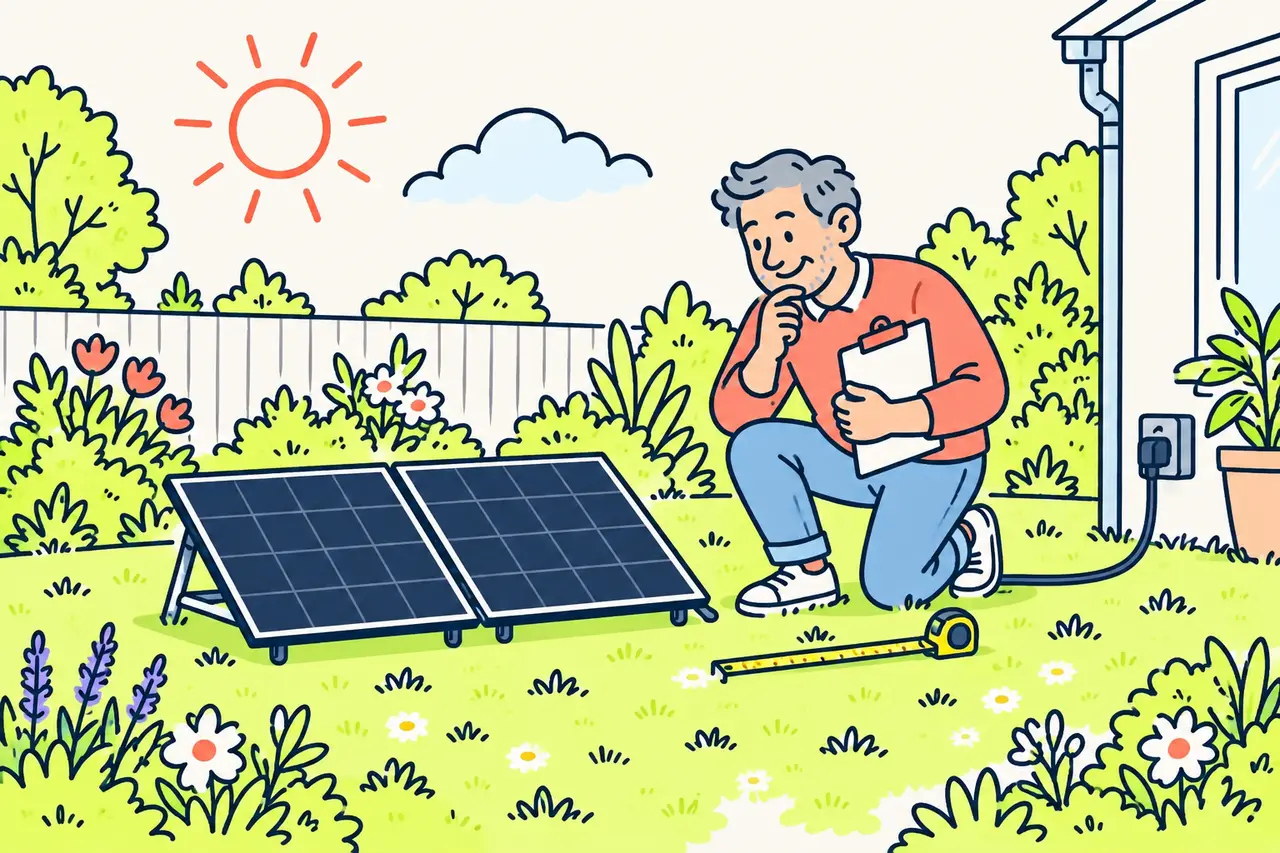
Revisit the shadows cast by nearby buildings, trees and fences as the season changes. A position that looks bright in summer may be shaded for longer in winter. This is a reason to observe your own space, rather than assume that a photograph from another garden predicts your output.
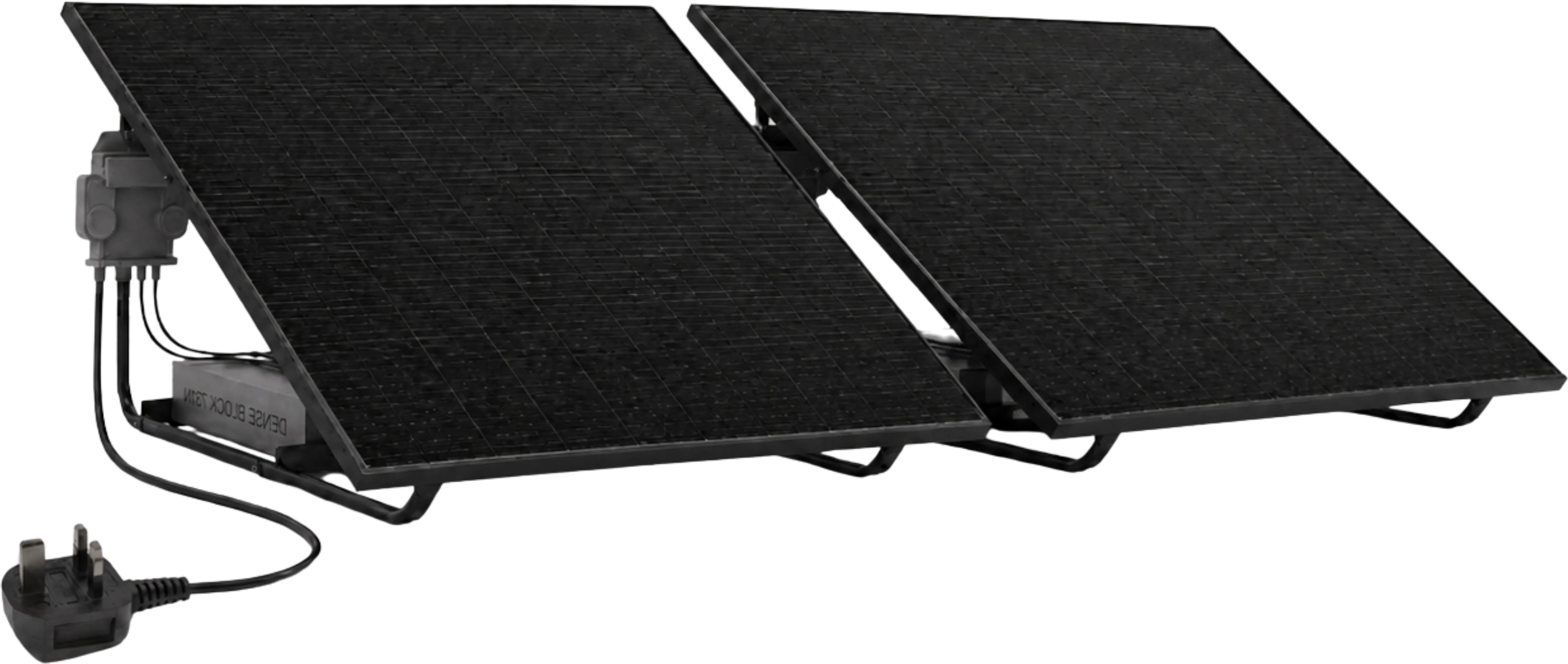
A kit’s rated wattage is not a promise of continuous power. UKSOL notes that output varies with season, sunlight, orientation and shading. Read its performance guidance.
Sources: National Energy Action: understanding solar PV · UKSOL: Plug-In Solar FAQs
Judge the year, not one bright afternoon
When comparing generation estimates, check the location, direction, shading and period covered. An annual total does not mean an equal amount every month. A clear-day example is not a forecast for a cloudy week.
It also helps to separate generation from savings. Your financial benefit depends on how much solar electricity you use as it is produced and the electricity price you would otherwise pay. A larger panel rating alone does not settle that calculation. Energy Saving Trust explains the importance of daytime use.
We do not quote a fixed winter yield or household saving here. Compare any estimate with the conditions in your own garden and ask what assumptions sit behind it.
Keep winter expectations practical
Use the kit only within the mounting and weather limits in its instructions. After severe weather, check for visible damage or a shifted mount; if anything is damaged or insecure, stop using it and seek advice. Do not improvise a different mounting arrangement to chase the winter sun. UKSOL’s safety and care guidance explains the precautions.
If you are considering a kit now, begin with the suitability checker. Note the light your proposed position receives during the shorter days, then compare the exact kit and mounting requirements before ordering.
Sources: UKSOL: Plug-In Solar FAQs
Start with your own space
Explore the checks that matter before choosing a plug-in solar kit.
Check suitability